

U.S. Senate Briefing Highlights Urgency of Supporting Struggle for A Democratic, Non-Nuclear Republic in Iran
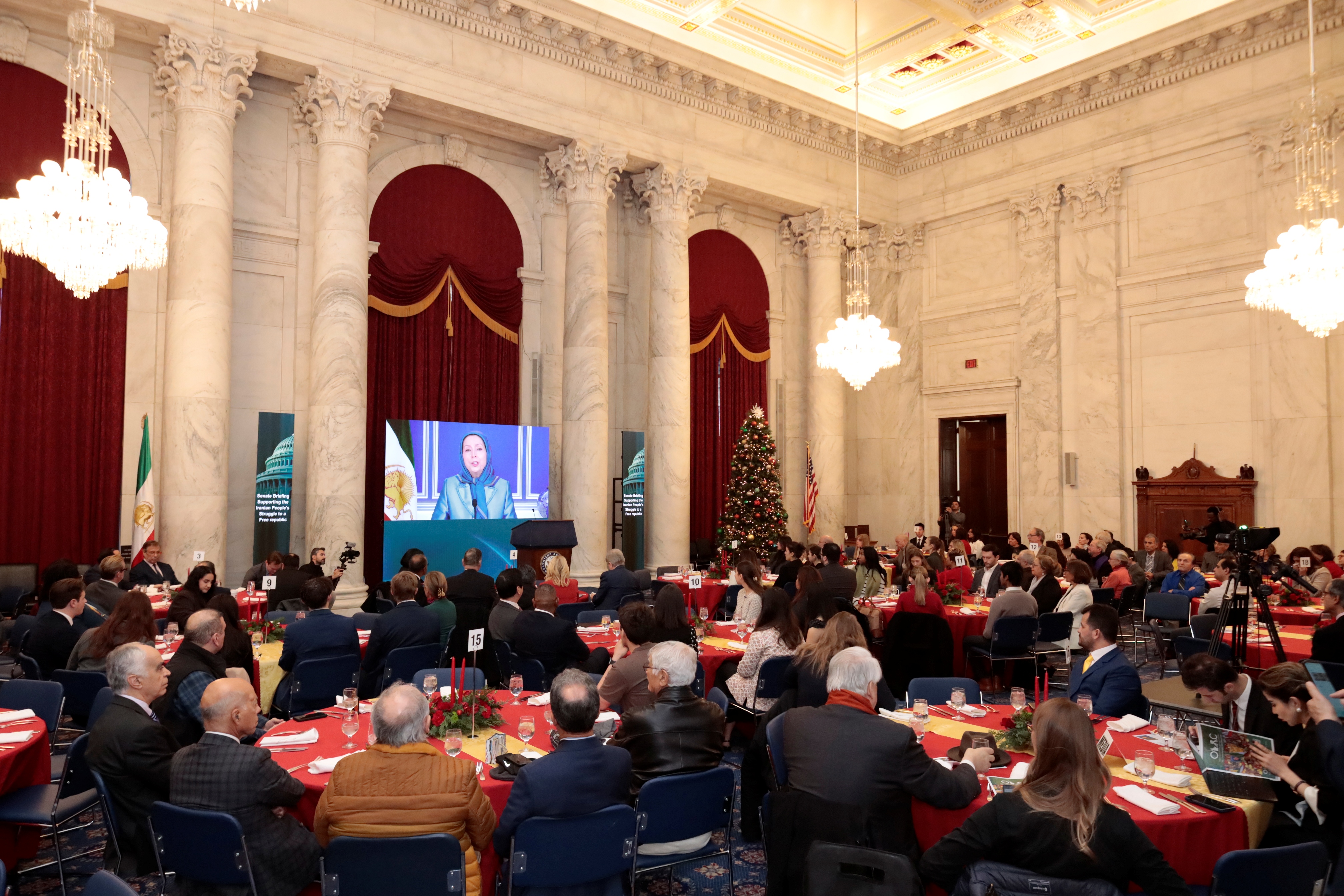
NCRI President-elect Maryam Rajavi Messages the “Supporting the Iranian People’s Struggle For A Free, Non-Nuclear Republic” Briefing in the US Senate historic Kennedy Caucus Room, Washington, December 11, 2025
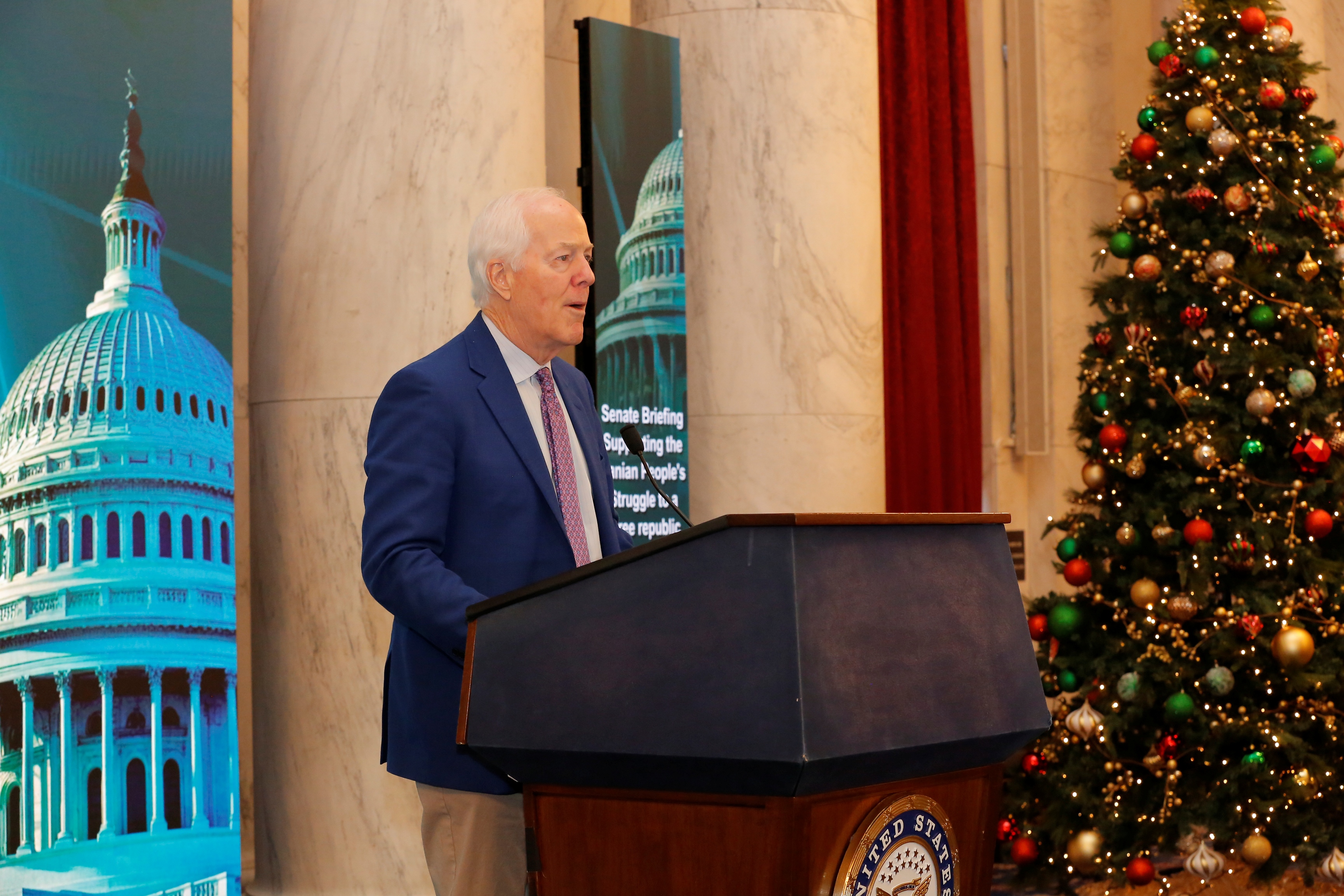
Senator John Cornyn (R-TX) addresses the “Supporting the Iranian People’s Struggle For A Free, Non-Nuclear Republic” Briefing in the US Senate historic Kennedy Caucus Room, Washington, December 11, 2025
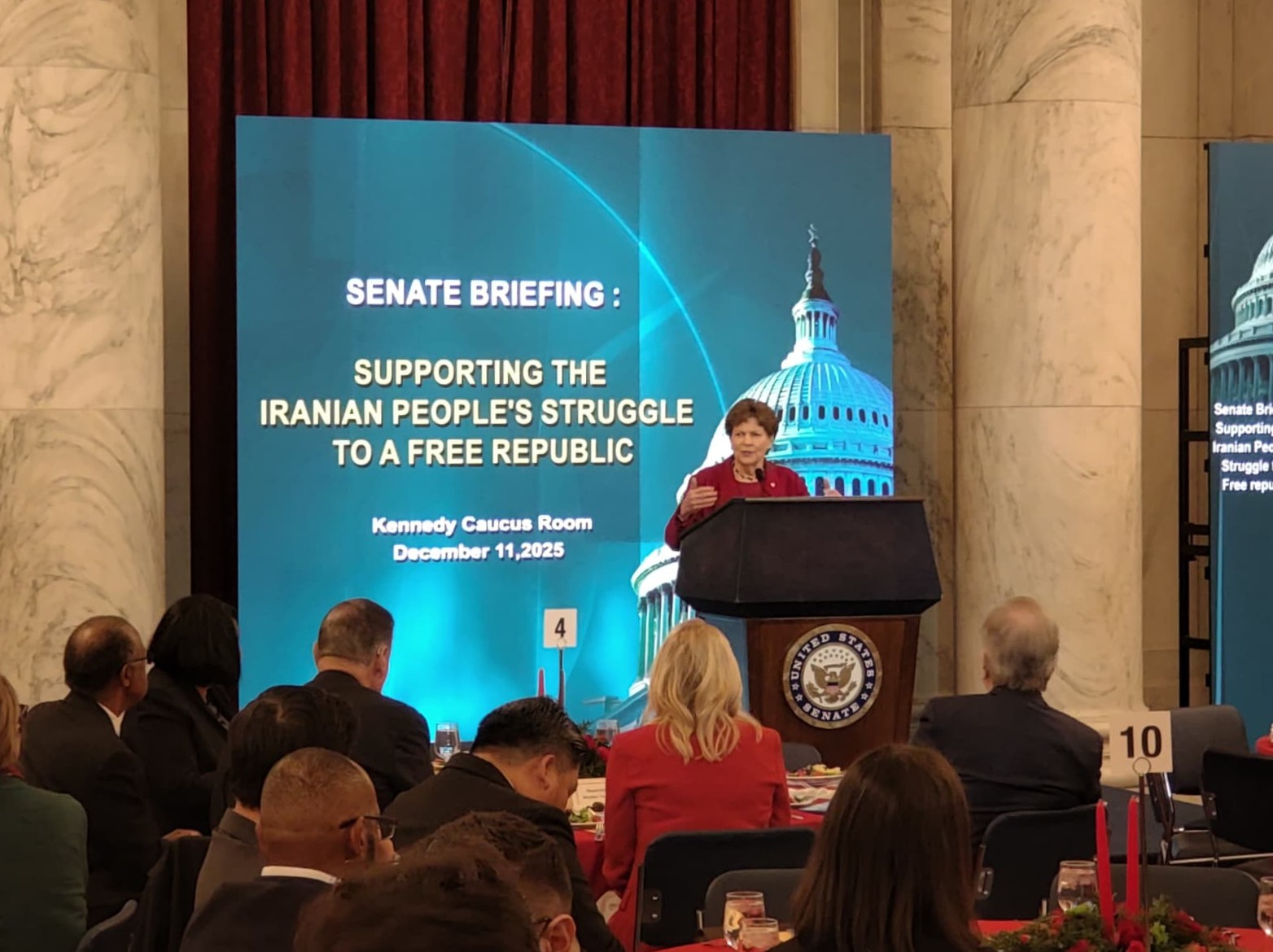
Senator Jeanne Shaheen (D-NH) addresses the “Supporting the Iranian People’s Struggle For A Free, Non-Nuclear Republic” Briefing in the US Senate historic Kennedy Caucus Room, Washington, December 11, 2025
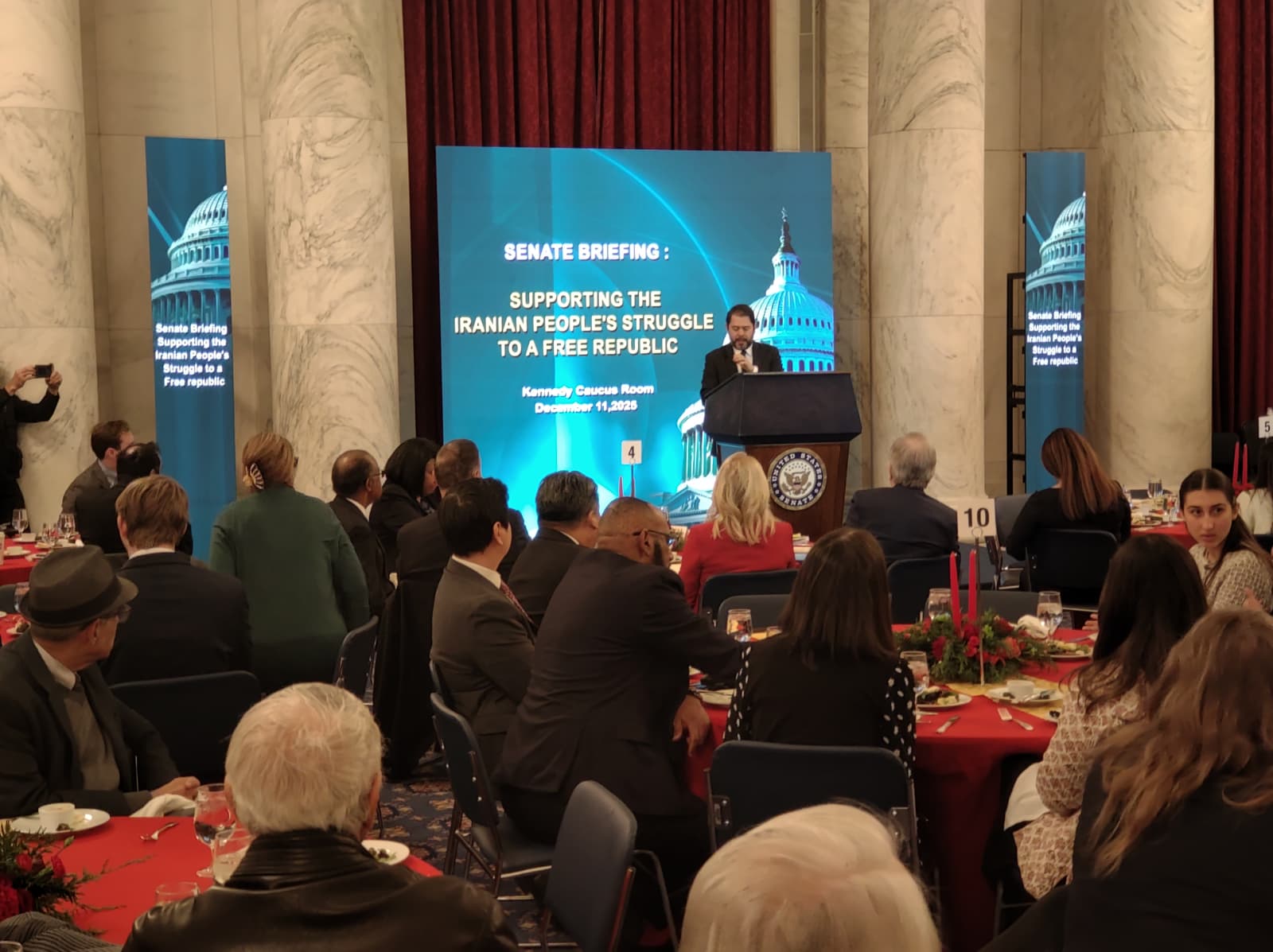
Senator Ruben Gallego (D-AZ) addresses the “Supporting the Iranian People’s Struggle For A Free, Non-Nuclear Republic” Briefing in the US Senate historic Kennedy Caucus Room, Washington, December 11, 2025
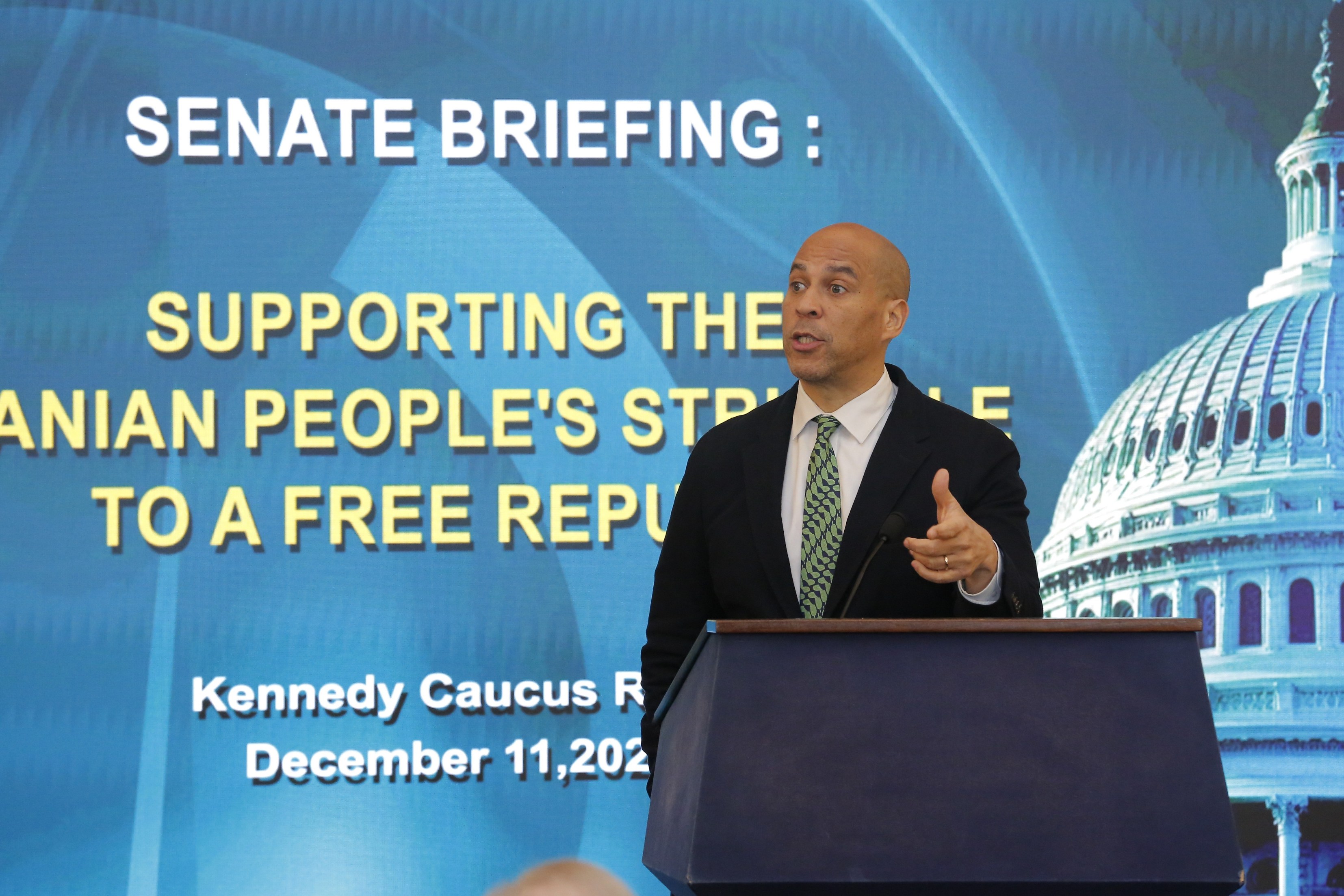
Senator Cory Booker (D-NJ) addresses the “Supporting the Iranian People’s Struggle For A Free, Non-Nuclear Republic” Briefing in the US Senate historic Kennedy Caucus Room, Washington, December 11, 2025
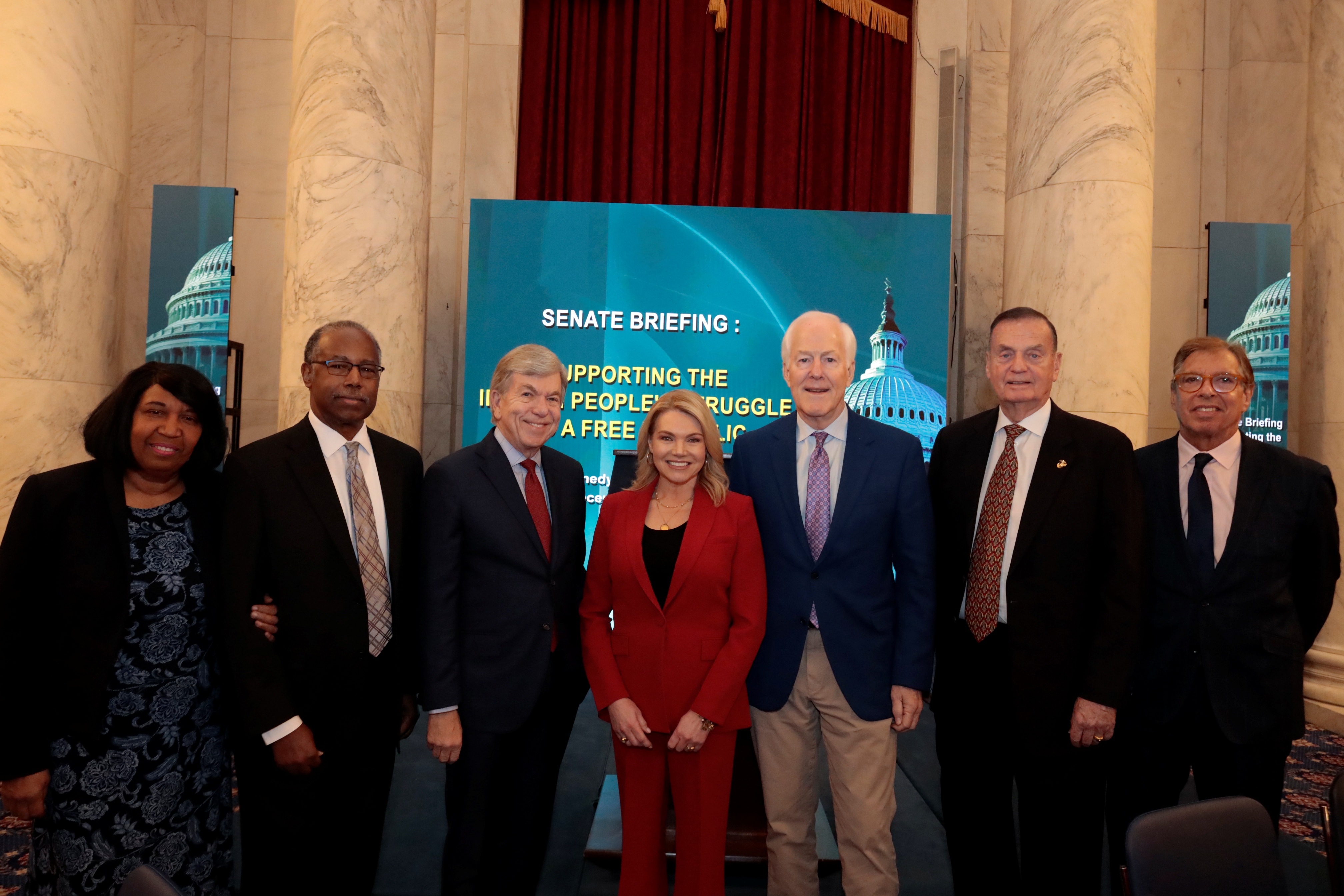
From right: Amb. Marc Ginsberg, Gen James Jones, Sen. John Cornyn, former State’s spokesperson Heather Nauert, former Sen. Roy Blunt, former HUD Secretary Dr. Ben Carson, and Mrs. Carson at the “Supporting the Iranian People’s Struggle For A Free, Non-Nuclear Republic.”
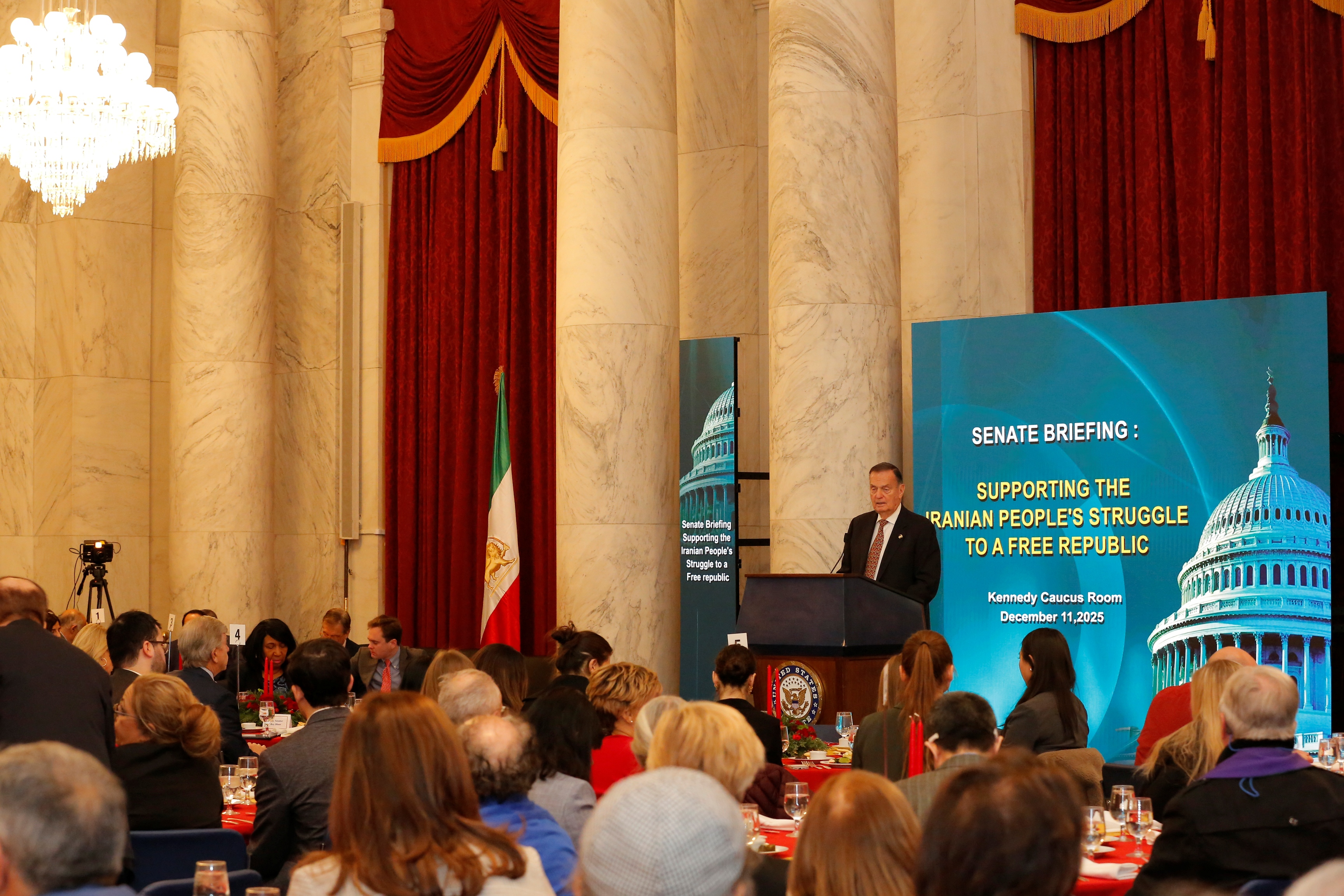
General James L. Jones, former National Security Advisor and Supreme Allied Commander Europe, addresses the “Supporting the Iranian People’s Struggle For A Free, Non-Nuclear Republic” Briefing in the US Senate historic Kennedy Caucus Room, Washington, December 11, 2025
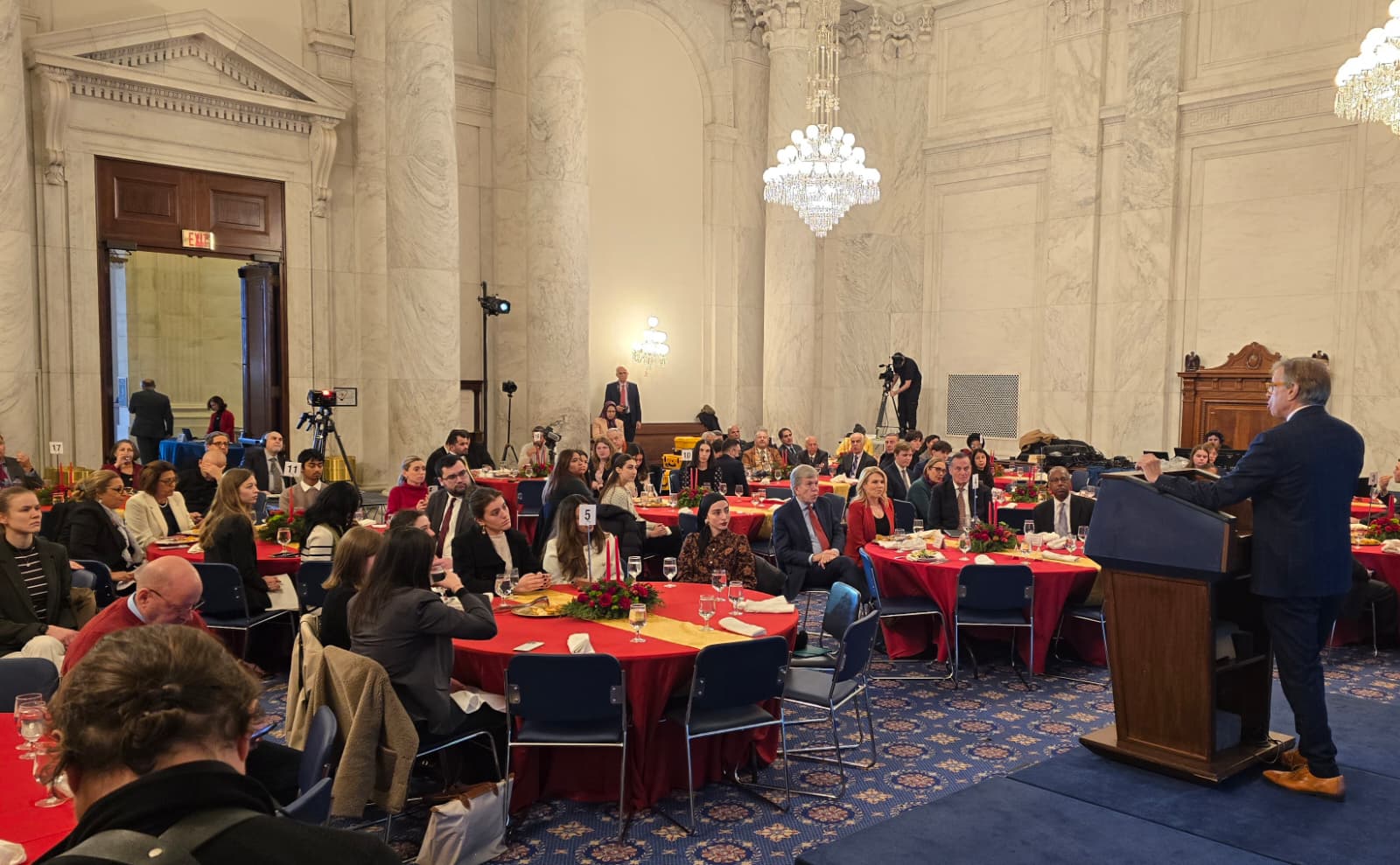
Ambassador Marc Ginsberg delivers the opening and closing remarks at the “Supporting the Iranian People’s Struggle For A Free, Non-Nuclear Republic” Briefing in the US Senate's historic Kennedy Caucus Room, Washington, December 11, 2025
NCRI President-elect Maryam Rajavi: “Our goal is to transfer power to the people of Iran through a peaceful and democratic process.”
WASHINGTON, DC, UNITED STATES, December 12, 2025 /EINPresswire.com/ -- Senior U.S. Senators, national security leaders, former administration officials, and policy experts convened on Capitol Hill on December 11, 2025, for a bipartisan Senate briefing titled “Supporting the Iranian People’s Struggle For A Free, Non-Nuclear Republic.” The event, held in the historic Kennedy Caucus Room, came at a decisive moment for U.S. policy as Iran faces escalating domestic unrest, intensified repression, and growing regional destabilization.
The briefing featured a significant message from Mrs. Maryam Rajavi, the President-elect of the National Council of Resistance of Iran (NCRI), who outlined the Iranian people's democratic alternative to religious dictatorship and emphasized the need for a principled international response.
The senators who spoke at the event, included, Senator Cory Booker (D-NJ), Chair of the Senate Democratic Strategic Communications Committee; member, Senate Foreign Relations Committee, Senator John Cornyn (R-TX), member, Senate Foreign Relations Committee, Senator Jeanne Shaheen (D-NH), Ranking Member, Senate Foreign Relations Committee; member, Senate Committee on Armed Services, and Senator Ruben Gallego (D-AZ), member, Senate Committee on Homeland Security and Governmental Affairs.
Speakers included General James Jones, USMC (Ret.), First National Security Advisor to President Obama; 14th Supreme Allied Commander Europe; 32nd Commandant of the Marine Corps, the Honorable Roy Blunt, former United States Senator from Missouri, the Honorable Ben Carson, 17th Secretary of Housing and Urban Development, the Honorable Heather Nauert, 27th Spokesperson for the U.S. Department of State; former Acting Under Secretary of State for Public Diplomacy and Public Affairs.
The program opened and concluded with remarks by Ambassador Marc Ginsberg, former U.S. Ambassador to Morocco, who moderated the event.
With the Iranian regime facing unprecedented internal challenges, the Senate event underscored the importance of aligning U.S. policy with the aspirations of the Iranian people for democratic change.
Senator Shaheen reminded the audience, “Each time we meet, you give a voice to Iran's democratic future, and you ensure that the world hears the truth.” She highlighted the threat of the Iranian regime, and the need to “protect the residents of Ashraf-3.”
Senator Cornyn referred to the Iranian regime as the head of the octopus of terrorism. Senator Cornyn recalled his meeting with Mrs. Rajavi in Ashraf-3 in 2017. “The people of Iran need hope because of the theocratic government there that has repressed so many of them and denied them that hope and opportunity for the future,” he said.
Senator Cory Booker said, “I come in here annually and I get fortified. You all give me strength, and a reminder of what Martin Luther King said so profoundly, that injustice anywhere is a threat to justice everywhere.” He highlighted the unifying role of the Iranian Resistance, “In a time of left and right, where deepening divisions are happening in this country, this room unites people. You have Democrats and Republicans, noble Americans who may have different political parties, but share that commitment, that common commitment to love.” He concluded, “We stand shoulder to shoulder in the Senate in our commitment to a free Iran and to the liberation of the people of that great nation with that great history.”
Senator Gallego, referring to the struggle of the Iranian people for freedom, emphasized, “anytime we see that type of movement, anytime we see that type of resistance anywhere in the world, as Americans as peace-loving people … we should continue to encourage, that community to fight, and hopefully eventually to change the direction. Because there is a great tomorrow coming for Iran.”
In her address, delivered to Senators and distinguished guests, Mrs. Maryam Rajavi expressed deep gratitude for congressional attention to Iran at a time when the regime is intensifying repression at home and heightening tensions abroad. “Thank you for recognizing the determination of the Iranian people and Resistance to overthrow the regime,” she stated, noting that the briefing was held just one day after International Human Rights Day—a day that symbolizes hope for the Iranian people and fear for Iran’s rulers.
Mrs. Rajavi emphasized that the suffering of the Iranian people—including torture, imprisonment, and systemic discrimination against women—has led to a single, unavoidable conclusion: “change in Iran through organized resistance and an organized uprising.” She stressed that democracy is both the objective and the method of this struggle, asserting that the only sustainable path forward is a democratic, pluralistic republic based on universal human rights.
“We do not ask any foreign government for money or weapons,” Mrs. Rajavi noted. “Our only request is that the international community recognize the Iranian people’s struggle to overthrow a regime that has occupied our country for nearly half a century.”
Mrs. Rajavi detailed a clear roadmap for a peaceful transition once the current dictatorship falls. “Our goal is not to take power for ourselves; our goal is to transfer power to the people of Iran,” she said. “Within six months, there will be a nationwide election for a Constituent Assembly, chosen directly by the people.”
The breadth and organizational strength of the movement behind this plan, she emphasized, are the guarantors of its success. She described the People’s Mojahedin Organization of Iran (PMOI/MEK) as an organized force of thousands of trained members, supported by a broad coalition within the National Council of Resistance of Iran and an expanding network of Resistance Units inside Iran. She highlighted Ashraf-3 in Albania, home to nearly 1,000 pioneering women, many former political prisoners, and experts who will play key roles in rebuilding Iran’s future.
Mrs. Rajavi also thanked Members of the Senate for their bipartisan support of Senate Resolution 145, which backs the rights and security of residents of Ashraf-3. “We deeply appreciate the honorable Senators from both parties who have backed this resolution,” she said.
Addressing the present moment, Mrs. Rajavi declared that Iran’s internal conditions “are ready for the regime’s overthrow.” She emphasized that the past six months have destroyed the illusion of gradual reform or alternative authoritarian models. “Only two real options remain: continuation of religious fascism—or real change brought by the Iranian people and their Resistance.”
She pointed to the regime’s record of more than 1,950 executions in 2025 alone, renewed death sentences for political prisoners, and Tehran’s persistent efforts to destabilize the Middle East as signs of the leadership’s desperation.
Mrs. Rajavi warned U.S. policymakers not to be misled by Tehran’s dual-track tactics. “Khamenei publicly rejects negotiation but secretly resorts to maneuvers to deceive the United States and Europe, to buy time,” she noted, describing these gestures as short-term survival tactics that cannot alter the regime’s inevitable trajectory.
For over four decades, Mrs. Rajavi reminded attendees, the MEK has long promoted a democratic interpretation of Islam, which stands in direct opposition to extremism and represents the ideological counterweight to the regime’s fundamentalism.
In calling for a coherent international policy, she stated: “Our demand is international firmness against this inhuman regime… preventing the regime’s sale of oil, ending the presence of its agents in Western countries, and recognizing the Iranian people’s struggle for the regime’s overthrow.”
Ambassador Marc Ginsberg, framed the briefing as a timely discussion about the future of U.S. policy toward Iran. He underscored the importance of evaluating not only the regime’s malign activities but also the viable democratic alternative being advanced by the Iranian Resistance. His closing remarks reiterated congressional interest in hearing diverse expert perspectives on supporting the Iranian people at a moment of profound political change.
General James L. Jones, former National Security Advisor and Supreme Allied Commander Europe, delivered an assessment of Iran’s accelerating threat to regional and international security. Building on Mrs. Rajavi’s remarks, General Jones highlighted the regime’s destabilizing activities, including terrorism, missile proliferation, and nuclear violations. He emphasized that U.S. national security interests align with empowering the Iranian people’s democratic movement rather than engaging in policies that inadvertently strengthen the regime.
He emphasized that a democratic, secular republic where sovereignty belongs to the people “is embodied in Madam Rajavi’s Ten-Point Plan, which has garnered remarkable international attention and support. It offers a roadmap for a pluralistic republic, free and fair elections, equality for men and women, separation of religion and state, freedom of religion, speech, press, and assembly, an independent judiciary, and a non-nuclear Iran at peace with its neighbors. And support for this vision is rising across the United States.”
The Honorable Roy Blunt, former U.S. Senator from Missouri, spoke about the long-standing bipartisan commitment within Congress to human rights and democratic values in Iran. He underscored the importance of supporting the Iranian people’s aspirations, noting that congressional resolutions and briefings such as this one reflect the recognition that the current regime is neither reformable nor compatible with international norms.
Blunt said that he, along with other senators, had met with Mrs. Rajavi in Ashraf in Albania, and that in her senate address, “Madam Rajavi talked about this continued effort to secure freedom for people who are willing to work for their own freedom and also freedom for a non-nuclear Iran.” He highlighted the significant role the MEK and NCRI have played in exposing the nuclear sites of the Iranian regime, preventing it from obtaining the nuclear bomb, and emphasized on the full rights of the MEK members in Ashraf 3.
Former State Department spokesperson Heather Nauert emphasized the significance of amplifying credible voices from inside Iran. She noted that Mrs. Rajavi’s message reflects the Iranian people’s rejection of both dictatorship and extremism.
Nauert spoke about the crucial role of women, “The opposition movement's leadership reflects this spirit. Maryam Rajavi's vision, expressed in her 10-point plan speaks to values that Americans across the political spectrum, different parties, care about universal suffrage, free elections, and equal participation for women, also a secular state, and an Iran that lives in peace with the United States and the world, giving power to the people, not the mullahs, she said earlier, These are not partisan principles; They are human ones. And it's incredible to see Republicans and Democrats working together on this issue here in Washington.”
Nauert stressed that U.S. diplomacy should be grounded in moral clarity and informed by the realities of Iran’s domestic landscape, where the regime’s legitimacy continues to erode.
Dr. Ben Carson, former Secretary of Housing and Urban Development, offered reflections on the moral imperative to support oppressed populations. He praised the courage of Iranian protesters and political prisoners and underscored that a democratic, non-nuclear Iran would contribute significantly to global stability. Carson also emphasized the importance of standing with movements that promote freedom, equality, and human dignity.
The December 11 briefing marked one of the most substantive bipartisan policy conversations this year. As Iran experiences escalating unrest, economic collapse, and a rapidly shrinking base of regime support, policymakers are increasingly examining the NCRI’s democratic platform, organizational capacity, and the credibility of its proposed transitional plan.
Mrs. Rajavi’s remarks reinforced the point that the choice for the international community is not between engagement and confrontation, but between policies that enable the people of Iran to shape their own political destiny versus policies that inadvertently solidify a failing dictatorship.
The Senate briefing concluded with a shared recognition that the Iranian regime has reached its weakest point in decades, while the Iranian people and their organized Resistance present a coherent, democratic alternative grounded in sacrifice, structure, and a clear roadmap for transition. As Mrs. Rajavi affirmed, “democracy is the heart of the solution” for Iran.
At this pivotal moment, U.S. policymakers are increasingly acknowledging that supporting the Iranian people’s struggle for freedom is essential for long-term regional and global peace and tranquility. The event underscored a growing bipartisan consensus that a free, democratic, and non-nuclear republic Iran is both achievable and vital—and that the United States must stand firmly with those who are risking everything to make it a reality.
--------------------
BACKGROUND
The National Council of Resistance of Iran (NCRI) is a democratic coalition of Iranian opposition organizations and personalities and was founded in Tehran, Iran, in July 1981, as the alternative to the clerical regime, a month after the onset of the nationwide resistance to overthrow the ruling dictatorship.
The NCRI is committed to the affirmation of the people’s sovereignty in a republic founded on universal suffrage and pluralism; gender equality; separation of religion and state and freedom of religions and faiths; freedom of thought, press, and association; support for peace in the Middle East; plan for the autonomy of Iranian nationalities and ethnicities; and the Universal Declaration of Human Rights, as embodied in Mrs. Maryam Rajavi’s 10-Point Plan for Future Iran.
The NCRI would serve as a provisional government led by its President-elect Mrs. Rajavi, and its primary responsibility will be to hold free and fair elections for a national and constituent assembly within six months to ensure the peaceful transition of power to the elected representatives of the Iranian people.
Iran’s largest, most organized opposition group, the People’s Mojahedin Organization of Iran (PMOI), also referred to as the MEK, is the principal member of the NCRI.
For more information:
▶️ NCRI-US: https://www.ncrius.org/
▶️ Maryam Rajavi: https://www.maryam-rajavi.com/en/
▶️ NCRI: https://www.ncr-iran.org/en/news/
▶️ MEK: https://english.mojahedin.org/
--------------------
These materials are being distributed by the National Council of Resistance of Iran-U.S. Representative Office (NCRI-US). Additional information is on file with the Department of Justice, Washington, D.C.
NCRI-US
National Council of Resistance of Iran - US Rep. Office
+1 202-747-7847
email us here
Visit us on social media:
LinkedIn
Bluesky
Instagram
Facebook
YouTube
TikTok
X
Legal Disclaimer:
EIN Presswire provides this news content "as is" without warranty of any kind. We do not accept any responsibility or liability for the accuracy, content, images, videos, licenses, completeness, legality, or reliability of the information contained in this article. If you have any complaints or copyright issues related to this article, kindly contact the author above.
