

Daeshin MC CEO Younghwan Choi Calls for National SAF Alliance

Younghwan Choi, CEO of Daeshin MC
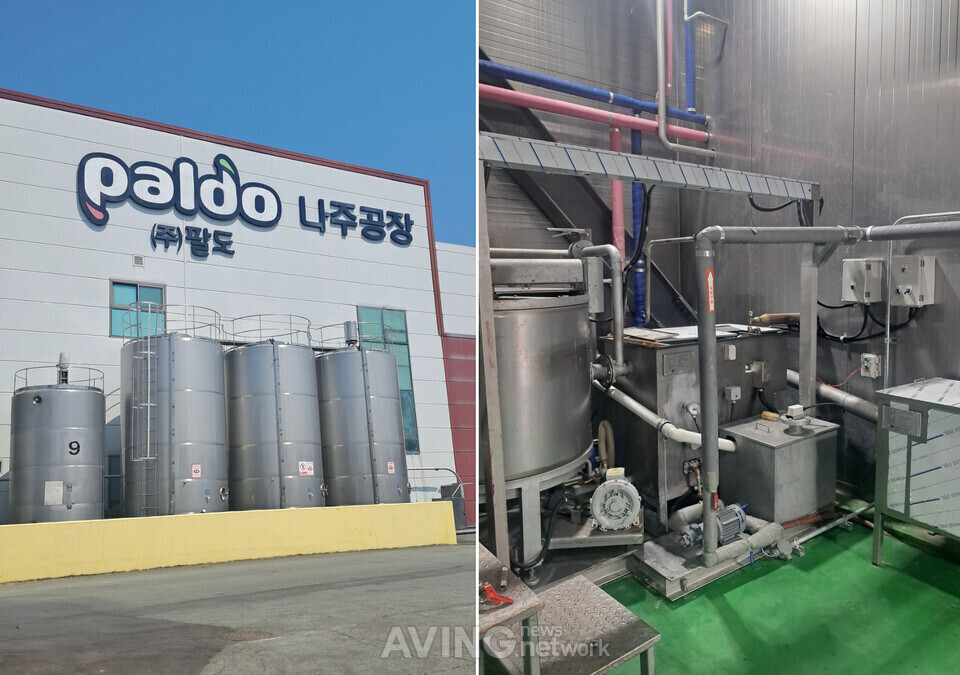
Daeshin MC oil-water separator installed at the Paldo Naju Plant. It achieved an oil-separation performance approximately nine times that of conventional methods.
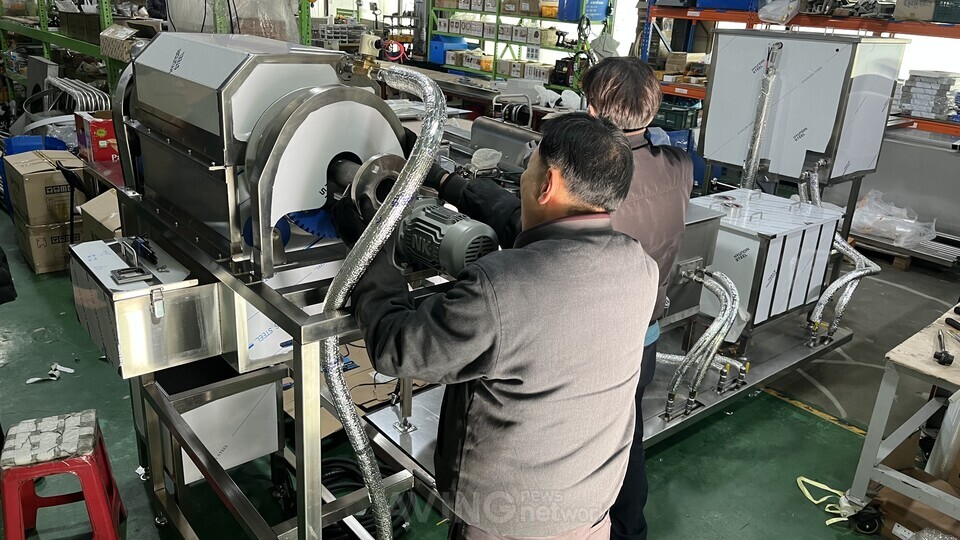
At the Daeshin MC factory, an oil-water separator designed to secure feedstock for Sustainable Aviation Fuel (SAF) is being assembled prior to delivery. The equipment separates and recovers trace oil from animal and vegetable wastewater for use as fuel feedstock.
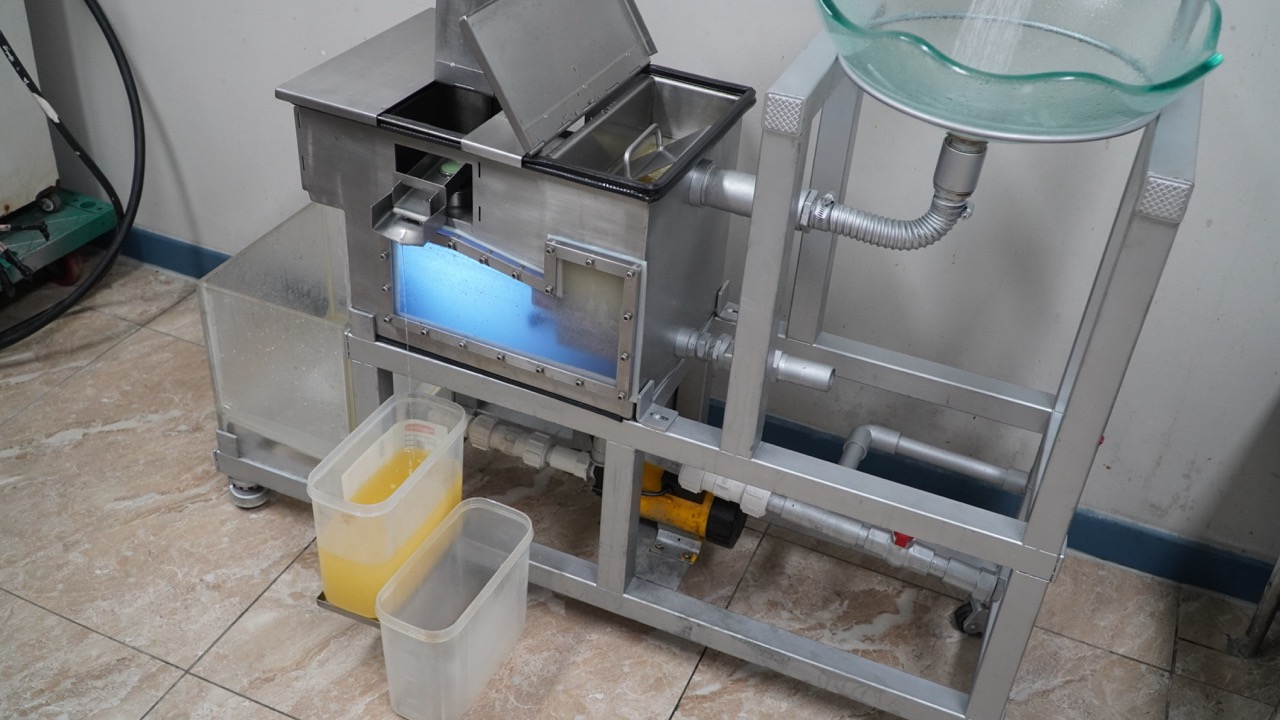
A demonstration model of Daeshin MC oil-water separator
“An 8% Aviation Fuel Threshold—We Can No Longer Cross It Alone.”
BUPYEONG-GU, INCHEON, SOUTH KOREA, February 22, 2026 /EINPresswire.com/ -- Daeshin MC CEO Younghwan Choi has issued a public proposal calling for the formation of a unified national alliance to secure sustainable feedstock for Sustainable Aviation Fuel (SAF), emphasizing that Korea has reached a critical turning point in meeting upcoming carbon-reduction mandates in the aviation sector. Citing rapid global regulatory changes and Korea’s own policy shift toward an eight-percent biodiesel blend by 2028, Choi stressed that no single company can overcome rising feedstock shortages, high production costs, and tightening international regulations alone.Choi highlighted that major economies—including the United States, Canada, and the European Union—have already incorporated SAF into commercial operations, with the EU mandating a two-percent minimum blend starting in 2025. Korea has similarly accelerated system-level preparation, and in 2024, Korean Air became the nation’s first airline to operate flights using domestically produced SAF. Despite this progress, Choi warned that the industry faces structural challenges, including feedstock competition, limited domestic resources, and fuel prices that are two to three times higher than those of conventional jet fuel.
Domestic refiners have already responded. Last year, SK Innovation, GS Caltex, S-Oil, and HD Hyundai Oilbank announced plans to jointly build SAF production facilities, sharing the burden of trillion-won investments and positioning themselves ahead of a projected 21-trillion-won global SAF market by 2030. However, Choi noted that even with expanded refining capacity, the industry must confront the more fundamental question of how to secure long-term, high-quality feedstock.
Choi presented “oil we have discarded until now” as a critical solution. He emphasized that oil-laden wastewater from food factories, cafeterias, franchise restaurants, and even small food-service sites contains high-potential biofuel material that Korea has historically overlooked. Daeshin MC’s oil-water separation technology enables the extraction of this trace oil with significantly lower energy consumption than conventional centrifugal systems, using specific-gravity and temperature-based methods. Choi explained that energy costs for oil extraction can be reduced by more than half, and that separation performance has reached levels up to 9 times higher than those of existing solutions.
Daeshin MC has deployed its systems across more than 100 operational sites, including Paldo’s Naju food-processing plant, POSCO cafeterias, major food-processing facilities, municipal catering centers, and even mixed-environment applications aboard the Jangbogo submarine. The company has also developed a full product lineup that includes large-scale systems for industrial factories, mid-scale units for institutional kitchens, and compact models for individual restaurants. Choi described this lineup as the foundation of a future feedstock supply chain rather than mere wastewater equipment.
According to Daeshin MC’s internal analysis, Korea discards approximately 7.94 million tons of recoverable oil annually, including oil in wastewater. This volume translates to roughly three trillion KRW in feedstock value and up to twelve trillion KRW in value when converted into biodiesel and SAF. Choi stated that this resource pool represents one of Korea’s most accessible and scalable solutions for meeting global SAF demand.
In line with this direction, the Korea Environmental Industry & Technology Institute and the Ministry of Environment are advancing a national project to produce biofuels from organic waste. The initiative covers pretreatment, lipid refining, lifecycle carbon assessment, international certification through ISCC and CORSIA, and complete supply-chain traceability. Daeshin MC will lead the consortium, overseeing pretreatment, feedstock collection, and on-site recovery operations.
Choi proposed a broad industry alliance that includes refiners such as GS Caltex, Hyundai Oilbank, DS Bio, and JC Chemical; biofuel processors; energy companies; collection and logistics partners; engineering firms; and carbon-certification and data-management organizations. He stressed that the success of SAF in Korea depends on coordinated action across all stages—from feedstock recovery and pretreatment to refining, fuel conversion, and certification. He cautioned that the era of ad-hoc waste-oil collection is over, noting that Korea now faces a final window of opportunity to build a globally competitive SAF ecosystem.
To accelerate this effort, Daeshin MC is preparing a dedicated SAF conference designed to connect companies across the entire value chain. The event will serve as a strategic forum where participants share technologies, operational strategies, and investment plans. Choi emphasized that the gathering will go beyond technical presentations and focus on building an integrated industrial structure capable of supporting Korea’s future aviation-fuel needs.
Choi concluded that SAF is not only an aviation issue but an industrial transformation that connects refining, food manufacturing, environmental management, logistics, and plant engineering. He stated that the companies that first integrate the full resource flow—from discarded oil to certified aviation fuel—will define the industry’s direction. He underscored that the key factors now are speed and solidarity, and that Korea has a genuine opportunity to lead the global SAF industry if prepared companies act together and link their capabilities into a single unified supply chain.
Daeshin MC is a South Korea–based clean-technology company specializing in environmental hygiene solutions, oil-water separation systems, and emerging feedstock-recovery technologies for next-generation biofuels. Through advanced separation engineering and scalable system design, the company supports industries ranging from food manufacturing to aviation fuel production, helping establish the foundation for a sustainable circular-resource economy.
Yoona Choi
Daeshin MC
+82 32-511-5001
email us here
Visit us on social media:
LinkedIn
YouTube
Other
Legal Disclaimer:
EIN Presswire provides this news content "as is" without warranty of any kind. We do not accept any responsibility or liability for the accuracy, content, images, videos, licenses, completeness, legality, or reliability of the information contained in this article. If you have any complaints or copyright issues related to this article, kindly contact the author above.
