

Natural Gas Prices Show Mixed Momentum in Q1 2026: India and USA Stabilize Near USD 4.5/MMBtu
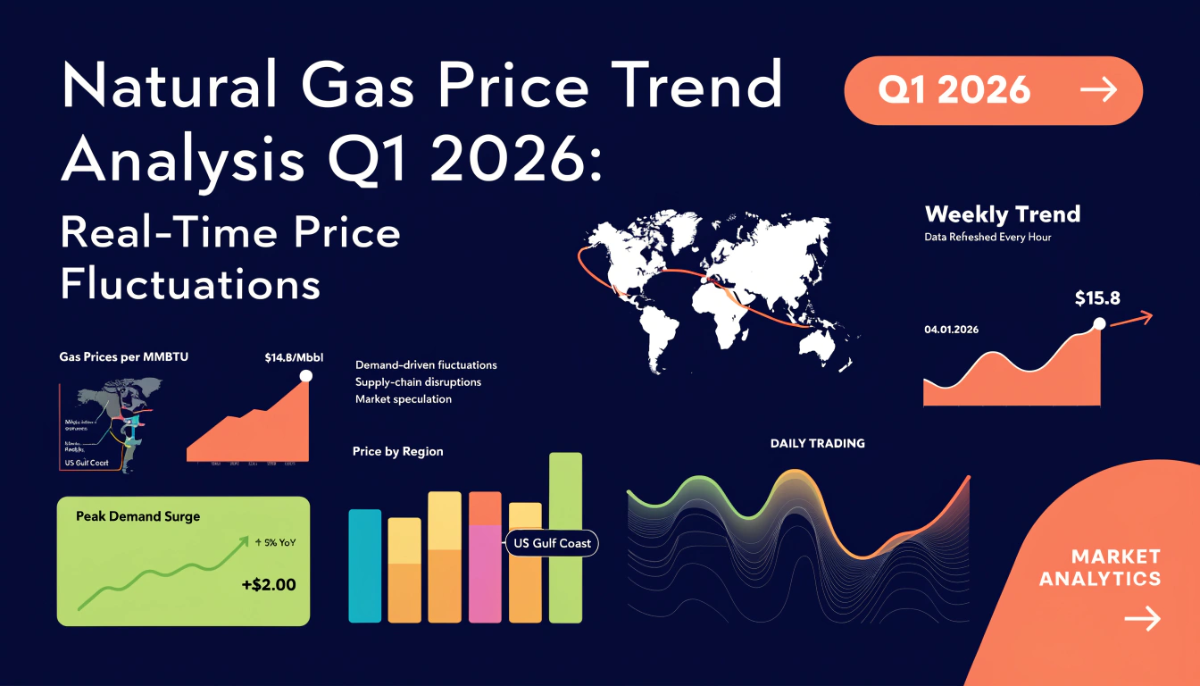
Natural Gas Price Index
Rising LNG trade, strong US production and seasonal demand drive regional price variations, with Germany peaking at $13.51/MMBtu while Asia remains balanced.
BROOKLYN, NY, UNITED STATES, April 16, 2026 /EINPresswire.com/ -- The natural gas price chart and forecast report indicates mixed momentum in early 2026, as global natural gas prices continue to be influenced by supply fluctuations, weather conditions, and shifting energy demand patterns. This trend suggests moderate volatility, with prices expected to remain sensitive to geopolitical developments and seasonal consumption cycles.Natural gas prices are witnessing regional variations, supported by stable supply in some markets and demand surges in others. While Europe faces pricing pressure due to energy security concerns, Asia and North America are experiencing relatively balanced supply-demand conditions. This reflects a cautiously stable natural gas market outlook through 2026.
The natural gas price index for Q1 2026 highlights clear regional contrasts::
• USA: USD 4.56/MMBtu
• China: USD 1.93/MMBtu
• Saudi Arabia: USD 2.44/MMBtu
• Germany: USD 13.51/MMBtu
• India: USD 4.66/MMBtu
In Q1 2026, global natural gas prices showed mixed trends across key markets. The USA recorded higher price levels compared to previous quarters, supported by strong winter demand and increased consumption across residential and industrial sectors, despite robust domestic production.
Germany experienced significantly elevated prices at USD 13.51/MMBtu, reflecting continued dependence on imports, high energy costs, and ongoing supply uncertainties in the European market. This trend is clearly visible in the natural gas price chart for the region.
In contrast, China and Saudi Arabia reported relatively lower prices due to controlled domestic pricing mechanisms, stable supply, and government-supported energy policies. China’s pricing remained subdued amid sufficient supply and moderated industrial demand.
India saw moderate pricing at USD 4.66/MMBtu, supported by balanced demand conditions and diversified sourcing strategies, including LNG imports and domestic production. The natural gas price trend in India reflects a stable but slightly upward trajectory.
Overall, the natural gas market in Q1 2026 remained moderately volatile, with regional supply-demand dynamics, geopolitical factors, and seasonal demand playing a key role in shaping global natural gas prices.
Access a Sample Report Now: https://www.imarcgroup.com/natural-gas-pricing-report/requestsample
Market Overview:
The global natural gas market has undergone significant changes in recent months, driven by supply chain adjustments and evolving energy demand. The natural gas price chart indicates fluctuating trends, especially in regions dependent on imports.
Supply-side factors such as LNG availability, pipeline flows, and storage levels have influenced LNG pricing trends and overall market behaviour. At the same time, increased production in North America has helped stabilize global supply.
The natural gas price chart reflects seasonal fluctuations, with higher prices during peak winter demand and softer trends during off-peak periods. Macroeconomic factors, including inflation and industrial activity, continue to impact demand levels.
Overall, the market is transitioning toward a more balanced phase, although short-term volatility remains a key characteristic of the natural gas price trend in 2026.
Key Market Trends & Latest Developments in 2026:
• Rising LNG Trade Flows: Global LNG shipments are increasing, improving supply flexibility and influencing global natural gas prices
• Europe’s Energy Security Push: Continued diversification of gas imports is reshaping the natural gas price forecast
• Strong US Production: Robust shale gas output is stabilizing global supply and supporting export capacity
• Asia’s Growing Demand: Industrial recovery is driving steady consumption and influencing the natural gas market outlook
• Seasonal Demand Volatility: Weather-driven demand continues to impact the natural gas price trend
• Expansion of LNG Infrastructure: New terminals are improving long-term supply stability
• Shift Toward Cleaner Energy: Natural gas remains a key transition fuel in global decarbonization
• Geopolitical Influences: Ongoing tensions are impacting global natural gas price fluctuations
• Energy Policy Impact: Regulations and subsidies continue to shape pricing dynamics
Cost Structure & Pricing Factors:
• Upstream Production Costs: Exploration and extraction costs influence base natural gas prices
• LNG Processing & Transportation: Liquefaction and shipping costs directly impact global LNG pricing trends
• Energy & Fuel Costs: Input cost fluctuations affect processing economics
• Storage Levels: Inventory levels influence short-term natural gas price volatility
• Weather Demand: Seasonal demand drives fluctuations in the natural gas price chart
• Geopolitical Risks: Supply disruptions influence global natural gas prices
• Infrastructure: Pipeline capacity and LNG terminals affect regional pricing
• Government Policies: Regulations impact both supply and demand dynamics
• Currency Rates: Exchange rates influence import/export pricing
• Energy Transition: Long-term decarbonization trends are reshaping natural gas price forecasts
Unlock Data-Driven Insights – Talk to an Expert: https://www.imarcgroup.com/request?type=report&id=22409&flag=C
Demand & Consumption Analysis:
Global natural gas consumption remains closely linked to power generation, industrial use, and residential heating. Demand analysis indicates steady growth, particularly in emerging economies.
The power sector continues to be a major consumer, with natural gas serving as a cleaner alternative to coal. Industrial demand also remains strong, especially in manufacturing and chemical production.
Urbanization and infrastructure development are further supporting demand, particularly in Asia. These trends are expected to sustain the natural gas price forecast over the long term.
Government initiatives promoting cleaner energy sources are expected to sustain long-term consumption growth, positioning natural gas as a transitional fuel in the global energy mix.
Historical Price Comparison (Q4 2025 vs Q1 2026):
• USA: Increased from around USD 3.80 to USD 4.56/MMBtu (~18–20% rise) driven by strong winter demand and higher consumption despite stable production levels
• China: Declined from approximately USD 2.10 to USD 1.93/MMBtu (~7–8% drop) amid sufficient supply and moderated industrial demand
• Saudi Arabia: Remained relatively stable, moving slightly from USD 2.30 to USD 2.44/MMBtu (~5–6% increase) supported by controlled domestic pricing and steady supply
• Germany: Surged from around USD 11.50 to USD 13.51/MMBtu (~15–18% increase) due to ongoing import dependency, supply concerns, and elevated energy costs
• India: Rose from approximately USD 4.20 to USD 4.66/MMBtu (~10–11% growth) driven by balanced demand and increased LNG import prices
Overall, the comparison between Q4 2025 and Q1 2026 highlights a divergent pricing trend across regions, with Europe witnessing sharp increases, while Asia showed relatively stable to slightly declining patterns. The data reflects how seasonal demand, supply security, and regional energy policies continue to shape the global natural gas pricing landscape.
Natural Gas Price Forecast 2026:
The natural gas price forecast 2026 indicates a stable yet slightly upward trend, with prices expected to remain within a balanced range throughout the year. The natural gas price trend will largely depend on seasonal demand and industrial consumption.
In regional terms, North America may see stable pricing due to strong production, while Europe and Asia could experience higher volatility due to LNG dependency. The natural gas price chart suggests steady movement rather than extreme spikes.
Looking ahead, the natural gas future price is expected to show gradual growth, supported by rising global demand and expanding LNG supply. Overall, the Natural Gas Price Forecast 2026 points toward stability with mild fluctuations, making it essential to track the natural gas price trend closely for better decision-making.
For more detailed insights, access the full report here: https://www.imarcgroup.com/natural-gas-pricing-report
About the Report
The latest Natural Gas Pricing Report provides comprehensive insights into global pricing dynamics, including detailed natural gas historical prices, trend analysis, and future forecasts.
Developed by IMARC Group, the report offers in-depth coverage of price index trends, regional analysis, cost structure, and demand outlook. It serves as a valuable resource for businesses, investors, and industry stakeholders.
Explore Related Pricing Reports to Gain Deeper Market Insights:
Latest Ammonia Prices, Trends & Forecast Insights 2026: https://www.imarcgroup.com/ammonia-pricing-report
Hydrogen Prices 2026: Trends, Analysis & Future Forecast: https://www.imarcgroup.com/hydrogen-pricing-report
Nitric Acid Prices: Latest Trends, Analysis & Forecast 2026: https://www.imarcgroup.com/nitric-acid-pricing-report
Elena Anderson
IMARC Services Private Limited
+1 201-971-6302
email us here
Legal Disclaimer:
EIN Presswire provides this news content "as is" without warranty of any kind. We do not accept any responsibility or liability for the accuracy, content, images, videos, licenses, completeness, legality, or reliability of the information contained in this article. If you have any complaints or copyright issues related to this article, kindly contact the author above.
