

Farrah Mechael Honors Her Heritage with Original Aramaic Finale on Contemporary Opera 'Remembrance'

Coloratura soprano Farrah Mechael, singer and songwriter of "Home (Aramaic)," the closing movement of "Remembrance."
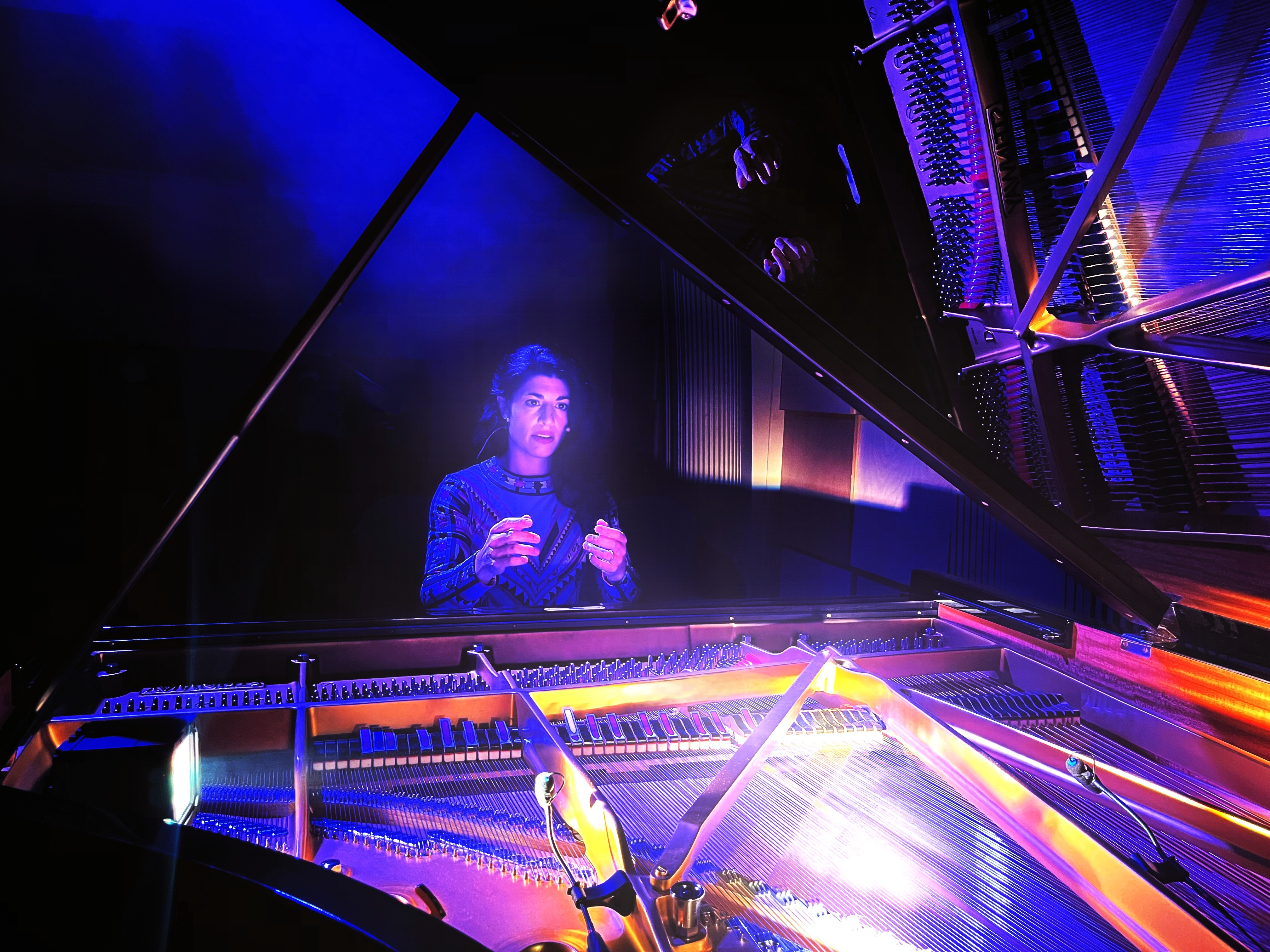
Yamaha Artist Nicole Brancato composed and performed the piano featured on "Home (Aramaic)," the final movement of "Remembrance."

GRAMMY-nominated composer and multi-instrumentalist Mehran Matin collaborated with Farrah Mechael throughout "Remembrance," blending contemporary composition with classical influences.

Classical pianist, composer, and producer Spearfisher engineered, recorded, mixed, mastered, and helped write "Home (Aramaic).

Songwriter Tamara Mechael wrote the lyrics with Farrah Mechael & Spearfisher for "Home (Aramaic)," the closing movement of "Remembrance," bringing the opera's story of memory, longing, heritage, and home to its emotional conclusion.
The opera's final movement combines Aramaic lyrics, Iraqi Maqam vocal traditions, and contemporary piano techniques in a tribute to memory, home, and heritage.
The final movement of her debut contemporary opera album "Remembrance," titled "Home (Aramaic)," is performed entirely in Aramaic, one of the world's oldest continuously spoken languages and a language deeply connected to Farrah and songwriter Tamara Mechael's family heritage.
More than simply a closing song, “Home (Aramaic)” serves as the emotional conclusion to the album's story, bringing together themes of longing, faith, identity, and the universal search for home.
Growing up, Farrah and Tamara Mechael sang in the Roman Catholic tradition and in the Chaldean Catholic Church, where Aramaic prayers, hymns, and liturgical music became a familiar part of their musical upbringing. Those early experiences ultimately inspired the sisters to conclude Remembrance in the same ancient language that had shaped part of their childhood.
Initially, the creative team envisioned ending the album with wordless vocalizations that simply blended with the music. But during recording sessions, Farrah, Tamara, and engineer Peter John ("Spearfisher") realized the album's conclusion called for something more personal.
"Instead of simply creating another vocal texture, we realized the ending needed real words," said Tamara Mechael. "We wanted the final moments of the album to speak from a place that was authentic to our family and our history!"
With Aramaic lyrics translating to "Take me home," "I want you," and "I want to go home," the piece reflects the album's recurring themes of remembrance, loss, and hope. As the story reaches its conclusion, the song expresses a longing to find one's way home while searching for someone to help lead the way.
Throughout the recording session, the sisters made phone calls to their mother from the studio, carefully confirming the pronunciation of each Aramaic phrase in real time before recording the final takes.
Yamaha Artist Nicole Brancato is an award-winning NYC-based composer and pianist who creates music to unlock wonder and explore our shared human experience. Described as “brilliant” by New York Magazine and celebrated for “redefining the very notion of classical music” by Atención San Miguel, her sprawling work spans international stages and interdisciplinary spaces.
Brancato composed and performed the piano featured on “Home (Aramaic),” employing a physical string-muting technique inside the piano that expands the instrument's traditional sound and creates a deeply meditative sonic landscape beneath Mechael's vocals. The contemporary piano textures provide a striking contrast to the ancient language, allowing centuries of musical tradition to meet modern classical composition.
Vocally, Mechael also drew upon her Middle Eastern heritage. While classically trained as a coloratura soprano, she incorporated elements of centuries old Iraqi Maqam, including quarter tones and traditional ornamentation, creating a vocal style that bridges Western operatic technique with Middle Eastern scales and musical traditions.
The result reflects a musical language that has long characterized the sisters' songwriting. Throughout their careers, Farrah and Tamara have regularly incorporated Middle Eastern scales and melodic influences into contemporary recordings, but “Home (Aramaic)” marks the first time those influences have been fully embraced within an original operatic work.
Released through Scorpio Productions' AngelSound Records, “Remembrance” is the debut contemporary opera collaboration between Farrah Mechael and GRAMMY-nominated Iranian pianist and composer Mehran Matin. The album features original lyrics by Tamara Mechael, piano performances by Mehran Matin, engineering, vocal production, mixing, and mastering by Peter John ("Spearfisher"), and concludes with Nicole Brancato's original piano performance on "Home (Aramaic).”
For the Mechael sisters, the final movement represents a tribute to family, language, and the belief that music has the power to preserve culture across generations.
"As artists, we're always searching for ways to communicate what words alone cannot,” said Farrah Mechael. "Ending “Remembrance” in Aramaic felt like honoring where we've come from while reminding listeners that some stories-and some languages—continue to live on through music."
“Remembrance” is available now on major digital streaming platforms.
Management
Scorpio Productions LLC
email us here
Visit us on social media:
Instagram
YouTube
Facebook
TikTok
X
Other
Legal Disclaimer:
EIN Presswire provides this news content "as is" without warranty of any kind. We do not accept any responsibility or liability for the accuracy, content, images, videos, licenses, completeness, legality, or reliability of the information contained in this article. If you have any complaints or copyright issues related to this article, kindly contact the author above.
